

Fiberglass vs Concrete Pools: Are Fiberglass Pools Good for Canadian Backyards?
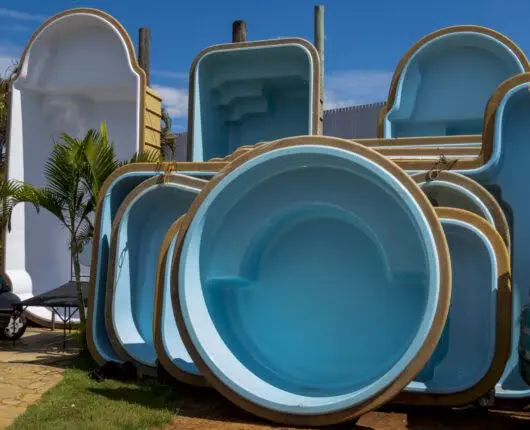
A fiberglass pool is a type of swimming pool made from fiberglass-reinforced plastic moulded into a basin shape. This manufacturing process involves forming layers of fiberglass into the desired shape and coating them with a gelcoat layer to create a smooth, durable surface. They arrive at your property in one piece and are lowered into a pre-dug hole.
While marketed as a low-maintenance, quick-install option, Canadian homeowners need to know the full picture — especially when our climate is known for freeze-thaw cycles that can stress rigid materials.
Fiberglass Pool Myths: True or False?
Fiberglass pools are popular because manufacturers say they are cheaper and quicker to install. However, this isn’t always true, and they might not be the perfect fit for every homeowner, especially those looking for a highly customized solution.
To learn why, we’ll discuss some of the myths around fiberglass pools and what other options homeowners have for constructing their perfect swimming pool.
Myth | Reality |
| Fiberglass pools are more energy efficient | False. Real-world energy efficiency depends more on maintenance habits, use of automatic covers, and efficient plumbing — not just the pool shell. |
| Fiberglass pools require fewer chemicals | False. Chemical usage depend on sun exposure, water temperature, and usage patterns. Fiberglass pools can still grow algae like any other pool. |
| Fiberglass pools last longer and are more durable | False. While they can last for years, they can’t match the indefinite lifespan of well-maintained concrete pools. Environmental and chemical factors can degrade them over time. |
| Fiberglass pools are eco-friendly | False. Their manufacturing and transportation can cause pollution, and recycling fiberglass is difficult, making disposal challenging. |
Better Pool Material Options: Concrete & Vinyl
While many homeowners immediately think a fiberglass swimming pool is their go-to, there are better options! Materials like concrete and vinyl provide greater design flexibility, impressive durability, and long-term value — all while delivering a beautiful, customized look for your backyard.
Here’s why concrete and vinyl might be the smarter choice for your pool investment.
What Is a Concrete Pool?
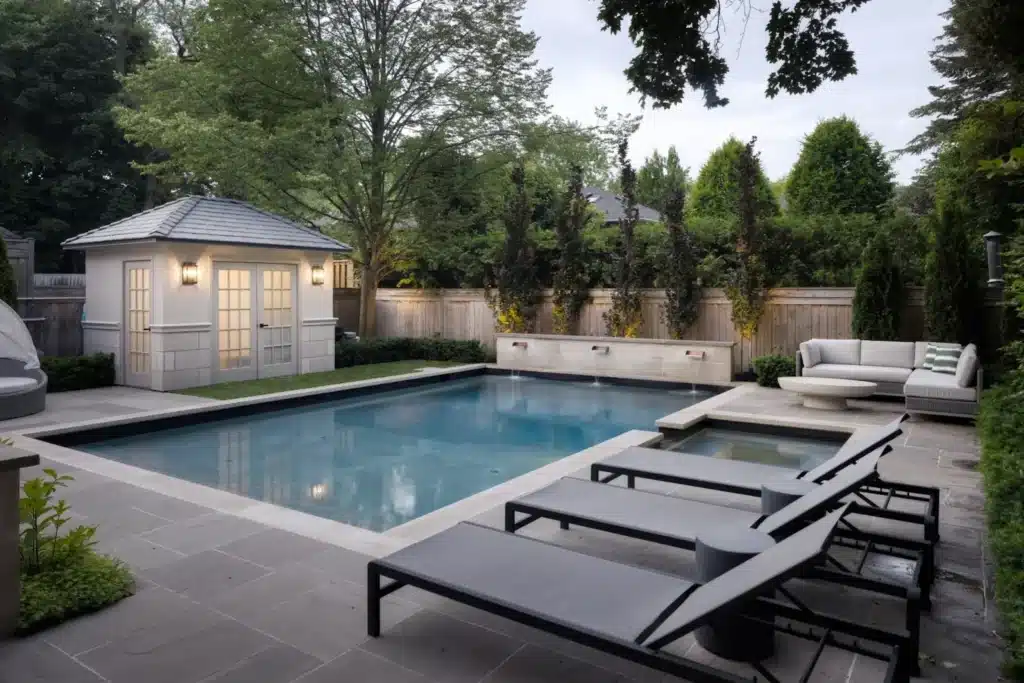
A concrete pool is built entirely on-site using a steel-reinforced framework that’s sprayed or poured with concrete, then finished with materials like plaster, tile, or pebble. This construction method allows for unlimited customization in shape, size, depth, and features, making it the top choice for truly unique, luxury designs.
Benefits of a Concrete Pool
Customization and Versatility
Concrete pools are celebrated for their vast design flexibility. They can be crafted into any shape, size, or depth and can incorporate a variety of features like vanishing edges, built-in seating, sun ledges or unique depths tailored to specific activities such as diving.
Longevity
Concrete is robust and durable, making it ideal for long-term use. A well-maintained concrete pool can last indefinitely, providing decades of enjoyment without the need for significant renovations. Think of the Trevi Fountain in Rome, the CN Tower, and the Toronto subway tunnels, all of which were constructed with concrete.
Resistance to Damage
Concrete’s robust nature allows it to better withstand natural shifts in the ground and severe weather conditions over time.
Aesthetic Appeal
Concrete pools can be finished with a multitude of materials, including tiles, stones, or pebbles, offering an upscale look that can be completely customized to match the aesthetic of any luxury home.
Long-Term Value
Concrete pools significantly enhance the property value due to their permanence and aesthetic appeal. Potential home buyers often view concrete pools as a high-end feature that adds to the desirability and resale value of a home.
What Is a Vinyl Liner Pool?
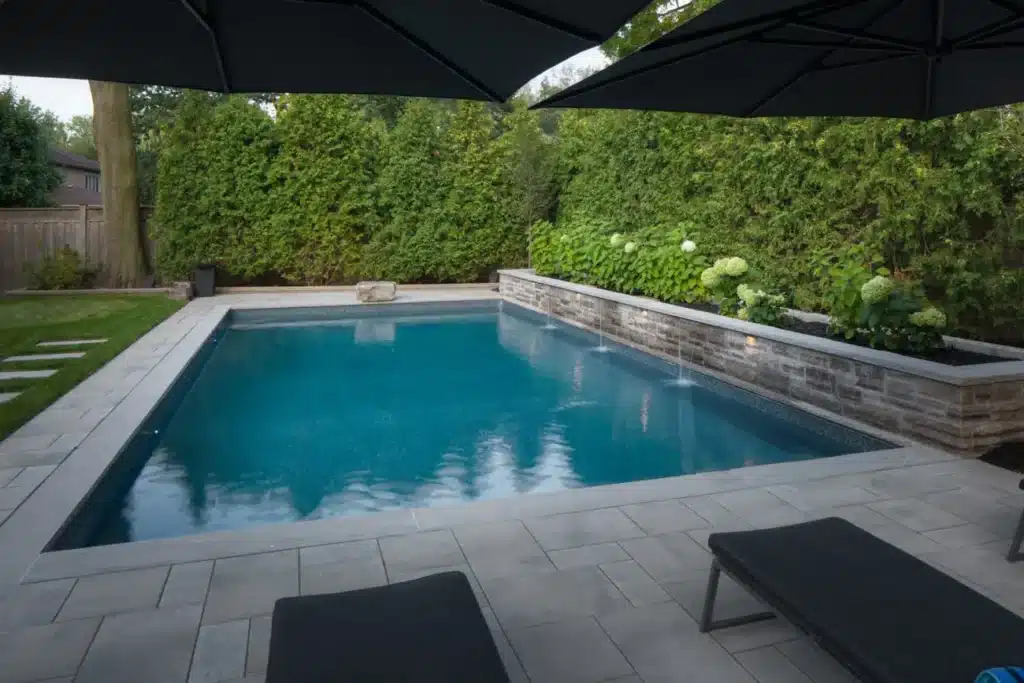
A vinyl liner pool features a steel or polymer wall structure lined with a custom-fit sheet of vinyl. This liner forms a soft, smooth surface over the pool shell, creating a comfortable swimming experience that’s gentle on feet and skin. Vinyl liner pools are available in a variety of shapes, sizes, and patterns, offering more design flexibility than fiberglass while remaining more budget-friendly than concrete.
Benefits of a Vinyl Pool
Cost-Effective Customization
Vinyl pools provide a balance between cost and customization. They are less expensive than concrete pools but offer more flexibility in design than fiberglass pools. Vinyl liners can be updated or changed, allowing homeowners to refresh their pool’s look without a complete overhaul.
Comfort and Design
The soft surface of the vinyl liner is gentle on feet and offers a comfortable swimming experience. Vinyl pools can also be designed in an array of patterns and colours, providing an aesthetic flexibility that can suit any homeowner’s taste.
Simple to Repair
Should a vinyl liner become damaged, it can be repaired or replaced relatively easily and at a lower cost than repairing a fiberglass or concrete pool. This makes maintaining the pristine look of the pool more manageable and cost-effective.
Adaptability to Seasonal Changes
Vinyl liner pools can better adapt to seasonal temperature fluctuations. The liner material is somewhat flexible, which helps it withstand the expansion and contraction that comes with changing temperatures, reducing the risk of damage.
Quick Installation
Vinyl pools are quicker to install than concrete pools, though they do require more frequent liner replacements over the pool’s lifespan.