

Winterizing Your Inground Pool in Toronto: A Complete Guide
The Importance of Winterizing Your Inground Pool
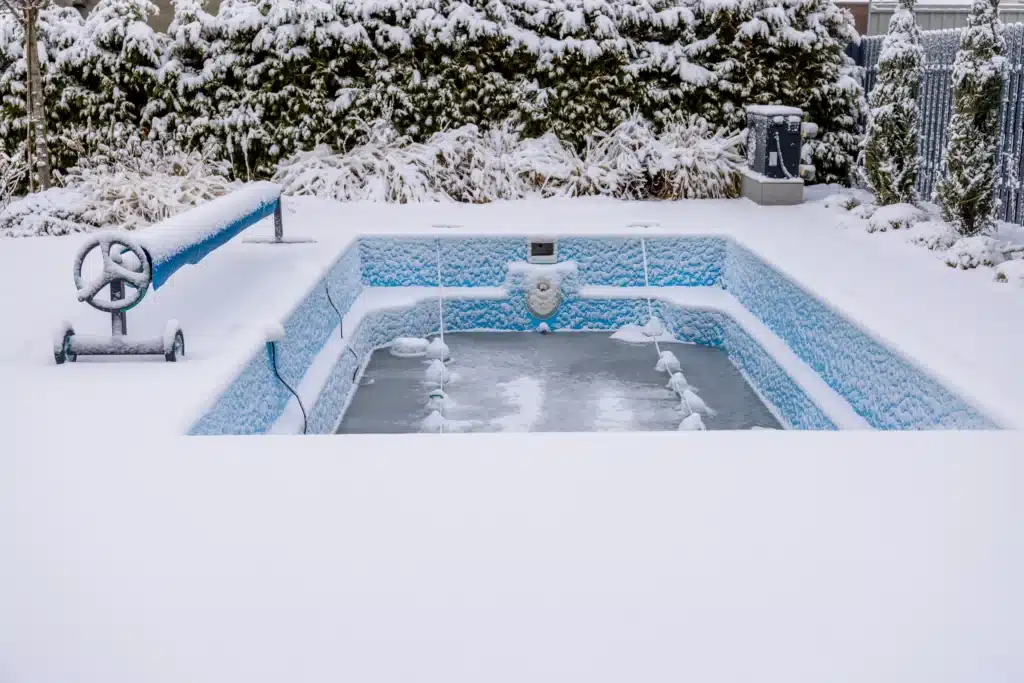
Toronto winters are tough on pools. Freeze–thaw cycles can crack tile and coping, burst underground plumbing, damage equipment, and turn spring opening into a costly repair. Winterizing your pool—properly and on time—protects your investment, keeps water healthier over winter, and sets you up for a smooth, early opening next season.
If you’re wondering how to winterize an inground pool in Toronto and across the GTA, this guide covers every step:
The Importance of Winterizing Your Inground Pool
Step-by-Step: How to Winterize Your Inground Pool
Recommended Water Levels by Pool & Cover Type
Common Pool Winterization Mistakes People Make
Why Hire a Professional Pool Closing Service?
What’s Included in a Professional Pool Closing Service
Closing your pool properly means more than just dropping the water and pulling on a cover. Each stage of the process is designed to protect a different part of your pool system from Toronto’s freeze–thaw cycles. Skipping one can lead to costly damage come spring.
Interested in year-round swimming instead? Check out our guide to luxury indoor pools.
1. Balance Your Water Chemistry
Balancing water is one of the most overlooked parts of winterizing your pool, but it’s the foundation of a proper closing. If levels are off, you risk corrosion, scale buildup, stains, and cloudy water when you reopen in the spring. Correct chemistry also helps winter chemicals last longer and work more effectively.
How to Balance Your Water Chemistry:
- Test and adjust your levels to the following ranges:
- pH: 7.2–7.6
- Total Alkalinity: 80–120 ppm
- Calcium Hardness: 200–400 ppm (lower end for vinyl, mid-range for concrete)
- Sanitizer: On the higher end of the safe range (Chlorine 2–4 ppm, Bromine 4–6 ppm)
Pro Tip: For peace of mind, bring a sample to Gib-San’s Pool & Hot Tub Centre for expert testing. Visit us in-store or call us at 416.231.9699 to register for your FREE Water Test Program.
2. Deep Clean & Shock
Debris, dirt, and organics left behind will break down over winter, creating stains, cloudy water, and algae blooms that are difficult to clean in spring. A thorough clean and shock treatment ensure your pool starts the off-season in the best possible condition.
How to Deep Clean and Shock Your Pool:
- Vacuum the pool floor and walls, paying attention to corners, steps, and benches.
- Brush the walls, tile line, and steps to loosen algae spores and biofilm.
- Empty skimmer and pump baskets, and skim debris from the surface.
- Backwash or clean the filter (sand, cartridge, or DE) for clear flow.
- Shock the pool 24–48 hours before closing:
- Add a chlorine- or bromine-based shock to oxidize contaminants.
- Allow free chlorine or bromine to return to normal levels before adding algaecide.
Pro Tip: Always shock first and add algaecide later. Done back-to-back, they cancel out their effectiveness.
The same principles apply to hot tubs—learn more in our complete hot tub maintenance guide.
3. Lower the Water Level
Lowering your pool’s water level is an important step to protect both the pool structure and the cover during pool winterization. If the water is too high, ice can push against tile, coping, or skimmers. If it’s too low, the liner may stretch or a safety cover may sag under the weight of snow and ice. The exact level depends on the type of cover you use.
How to Lower Your Pool’s Water Level:
- Use your filter’s waste setting (on a sand or DE filter) to pump water directly out of the pool.
- For cartridge filters, remove the drain plug or use a submersible pump.
- Lower the water gradually—keep an eye on levels to avoid over-draining.
- Always discharge water in compliance with local bylaws (e.g., dechlorinate before draining to storm sewers in Toronto; never discharge saltwater pools to storm drains).
Recommended Water Levels by Pool & Cover Type
| Pool/Cover Type | Recommended Water Level | Notes |
| Solid safety cover | 3–6 inches (7–15 cm) below skimmer mouth | Prevents ice from reaching skimmers |
| Mesh safety cover | 12–18 inches (30–45 cm) below skimmer mouth | Allows room for precipitation and snow melt |
| Automatic cover | Keep at normal operating level | Provides cover support; follow manufacturer guidelines |
| Concrete pools | Below tile line | Prevents freeze damage to tile and coping |
| Vinyl pools | Enough water to support liner (do not drain too far) | Maintains liner shape and stability |
Pro Tip: Always double-check your cover manufacturer’s recommendations. Too high risks ice damage; too low risks structural stress or liner collapse. A professional pool closing service will always confirm your water level based on cover type.
4. Blow Out Plumbing Lines
If you’re learning how to winterize an inground pool yourself, line blow-outs are the trickiest step. Water trapped inside plumbing is the number one cause of freeze damage. As water freezes, it expands, cracking PVC lines, skimmer throats, and return fittings. Even a small amount of standing water can lead to costly underground leaks or broken connections when spring arrives.
How to Blow Out Plumbing Lines:
- Turn off power to pumps and heaters at the breaker before starting.
- Use a high-volume blower (or a carefully regulated shop vac) to push air through all lines:
- Skimmers
- Returns
- Main drain (blow until you see bubbles, then plug to create an air lock)
- Water features (sheers, bubblers, deck jets)
- Spas or attached hot tubs
- Once each line is blowing only air, seal it with winter plugs.
- For skimmers, install a Gizzmo or use a skimmer plate to absorb expansion and prevent ice from cracking the housing.
- In vulnerable low points, add non-toxic pool antifreeze (propylene glycol, never automotive antifreeze) as extra protection.
Pro Tip: Work methodically from one line to the next, and listen for changes in sound—water gurgles mean it’s not fully cleared yet. Take your time here: a proper blow-out is the single most important step for preventing freeze damage.
5. Protect Equipment
Your pool equipment works hard all season, and winter is when it’s most vulnerable. Any water left inside pumps, filters, heaters, or salt systems can freeze, expand, and cause cracks or internal damage.
Taking the time to fully drain and protect your equipment ensures everything is ready to start up smoothly in the spring. This is why many homeowners choose a pool closing service at this stage, since heaters and salt cells are easy to damage without experience.
How to Protect Your Pool Equipment:
| Equipment | Winterizing Steps |
| Pump(s) |
|
| Filter |
|
| Heater |
|
| Salt systems |
|
| Chlorinators & feeders |
|
| Automation & timers |
|
| Accessories |
|
Pro Tip: Keep a small labeled bag for plugs, O-rings, and fittings. Store it in the pump basket or with your winter cover kit so nothing goes missing before spring.
6. Add Winter Chemicals
Even with balanced water, your pool needs extra chemical protection to stay clear and healthy through the off-season. Without it, you’ll likely open in spring to cloudy water, stains, or algae blooms.
How to Add Winter Chemicals:
- Shock treatment: Add a final dose of chlorine or bromine shock (if not already done) to oxidize lingering contaminants.
- Algaecide: Use a long-lasting, non-copper algaecide to prevent algae growth under the cover.
- Stain and scale inhibitor: Protects surfaces, plumbing, and heaters from calcium buildup and staining.
- Enzyme treatment (optional): Breaks down oils, lotions, and organics that can cause scum lines or cloudy water.
Want everything you need in one package? Shop the Gib-San Pool Closing Kit for a complete set of professional-grade winter chemicals, carefully selected by our experts.
Pro Tip: Add chemicals with the pump running for proper circulation, then shut equipment down once distributed. Always follow dosage instructions, and remember—shock first, algaecide second. Adding them together cancels out their effectiveness.
7. Install and Secure the Pool Cover
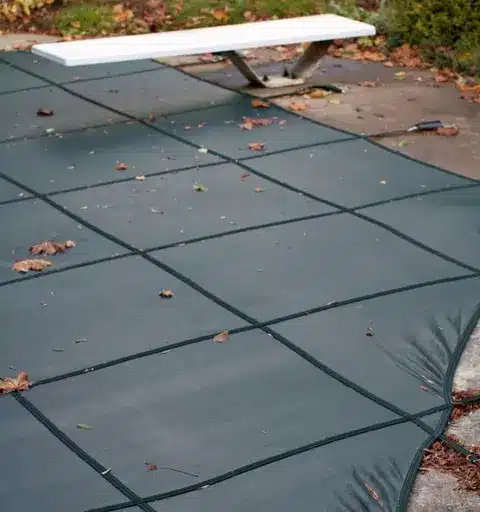
Your pool cover is the final barrier protecting your pool from debris, snow, and accidents during the winter. A properly installed, tensioned cover not only keeps the pool clean but also prevents damage caused by ice and excess weight.
How to Install and Secure Your Pool Cover:
- Inspect your cover for wear, tears, or weak seams before installing.
- Secure all straps or anchors evenly to ensure uniform tension.
- For solid covers, set up a cover pump to remove rainwater and melted snow.
- For mesh covers, double-check that water is lowered to the correct level (see Step 3) to prevent ice damage.
- Confirm that anchors, springs, and hardware are tight and positioned correctly.
- Want extra protection against debris? Add a Leaf Net Pool Cover over your existing cover for easier cleanup in spring.
- Using a tarp-style cover? Secure it with Single Chamber or Double Chamber water bags to keep it tight and stable through winter weather.
Pro Tip: A snug, tensioned safety cover protects more than your pool—it also improves backyard safety by preventing accidental entry. Check tension mid-winter if possible, especially after heavy snow or wind.
Even seasoned pool owners can make errors when winterizing their pool. Unfortunately, a single missed step of the pool closing process can translate into thousands of dollars in springtime repairs.
To protect your investment, watch out for these common pitfalls:
1. Closing Your Pool Too Early
- Closing before the water cools (below 10 °C / 50 °F) encourages algae growth under the cover.
- For the best results, wait until water is consistently cold before starting the pool closing process.
2. Overlooking Plumbing Line Preparation
- Water left in pipes will freeze, expand, and crack PVC lines or fittings.
- Properly blowing out and plugging lines is one of the most important steps in how to winterize an inground pool.
3. Using the Wrong Pool Cover
- Cheap tarps collapse under snow and allow debris into the pool.
- A properly fitted safety cover is designed to handle Toronto and Canadian winters and keep your pool protected.
4. Skipping Winter Chemicals
- Neglecting to add algaecide, stain/scale inhibitors, and balancing chemicals leads to cloudy water, staining, and algae blooms.
- A professional pool closing service ensures the right chemicals are used for long-term protection.
5. Draining the Pool Too Far
- Never fully drain your pool.
- Concrete pools risk hydrostatic pressure damage.
- Vinyl liners can shrink, wrinkle, or shift if not supported by water.
6. Taking DIY Shortcuts
- Skipping key steps like heater drainage, salt cell removal, or using antifreeze incorrectly often causes expensive equipment failures.
- Hiring professionals who specialize in winterizing pools in Toronto ensures nothing is overlooked.
Pro Tip: Treat winterizing your pool as an investment, not just a seasonal chore. A professional pool closing is like insurance—protecting you from costly spring repairs and giving you peace of mind all winter.

Closing a pool properly involves far more than lowering the water and pulling on a cover. A professional pool closing service ensures every detail is handled correctly—protecting your investment and saving you from costly repairs in spring.
1. Technical Expertise Homeowners Often Miss
- Professionals know how to blow out hidden plumbing lines, winterize heaters, and correctly prepare saltwater systems.
- They follow proven procedures for how to winterize an inground pool, reducing the risk of freeze damage or missed steps.
2. Long-Term Protection with the Right Products
- Experts use commercial-grade winterizing chemicals designed to last through the entire off-season.
- Proper dosing and sequencing prevent algae, staining, and corrosion—problems that often appear with DIY closings.
3. Peace of Mind and Fewer Surprises in Spring
- A professional service reduces the likelihood of opening to cloudy water, cracked equipment, or costly leaks.
- It also saves time and effort, especially for pools with attached spas, water features, or complex plumbing systems.