

What Impacts the Cost of a Custom Pool?
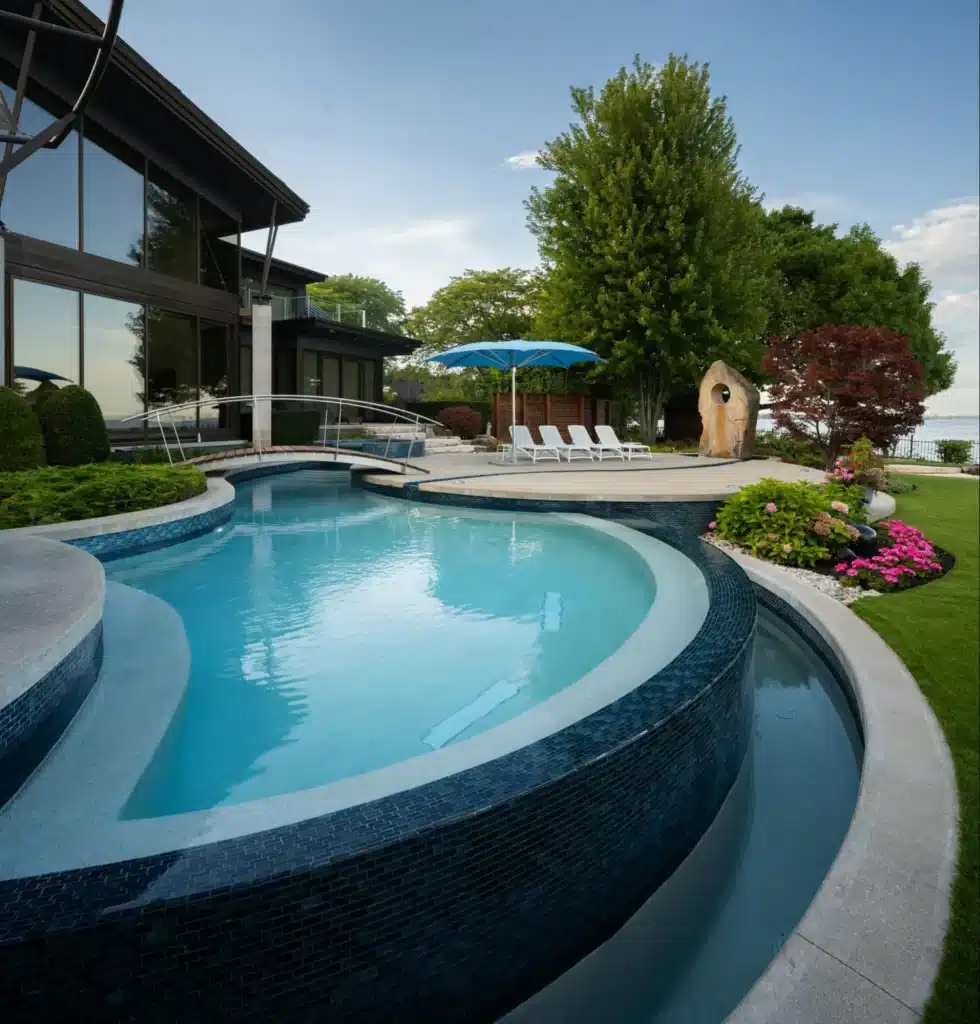
“How much does it cost to build a pool?” is one of the first questions every homeowner types into a search bar, and it’s also one of the hardest to answer honestly. Swimming pool cost isn’t a fixed number on a price list. It’s the sum of dozens of decisions, some of them yours to make and some of them decided by the property you’re building on.
That’s different from asking why two companies quote the same pool differently, which comes down to scope, build standards, and who’s behind the work. This is about the other half of the equation: even with one honest builder, your custom pool cost is shaped by what’s actually in your yard and what you choose to put in it.
Three things drive that number more than anything else: your property, your design choices, and the features you add once the shell is built. Understand those three, and “how much does it cost for a swimming pool” stops being a mystery and starts being a plan you can budget for.
Want to know what your project would actually cost?
Book a free consultation and we’ll walk your property with you.
In this blog:
- How Much Does a Custom Pool Cost? Why There’s No Single Number
- Property Variables: What Your Lot Brings to the Price
- Design Variables: The Choices That Set Your Shell Price
- Feature Variables: What You Add Once the Shell Is In
- Site Conditions That Can Move the Number Further
- How These Variables Add Up to Your Final Quote
- Design and Build a Custom Pool Priced Around Your Property
- Custom Pool Cost FAQs
How Much Does a Custom Pool Cost? Why There’s No Single Number
Search “cost of building a swimming pool” and you’ll find a wide range and not much explanation. That’s not a marketing dodge. A custom pool genuinely doesn’t have one price, because it isn’t one product. It’s a structure built to fit a specific lot, to a specific spec, with a specific list of equipment and finishes attached to it.
Two neighbours on the same street can ask for what sounds like the same pool and land on very different numbers, and both quotes can be entirely fair. The gap almost always traces back to one of three buckets:
- Property variables: What your lot brings to the project before a shovel goes in
- Design variables: The shape, material, and structural choices that set your shell price
- Feature variables: What gets added once the shell is built, from heating to lighting to decking
This piece breaks down all three. If you’ve already got quotes in hand and you’re trying to make sense of why they don’t match, our guide to why pool prices vary between companies covers the company side of that gap. This one covers the property and design side of it.
Property Variables: What Your Lot Brings to the Price
Before a single design decision gets made, your lot has already started shaping the number. These are the variables you didn’t choose but still pay for.
Access
Can equipment reach the backyard directly, or does it need to come in through a side gate, over a fence, or around a house? Tight lots in the Greater Toronto Area sometimes require smaller machinery, hand excavation in places, or protective measures for existing hardscaping, and all of that is labour and time.
Soil conditions
Clay, rock, high water tables, and fill soil all excavate and engineer differently. A site with straightforward soil is faster and more predictable to dig and shore than one that needs extra dewatering, shoring, or engineered backfill.
Grade and slope
A flat yard is the easiest and least expensive starting point. A sloped lot often means retaining walls, additional excavation to level a usable area, or a design that steps with the grade instead of fighting it.
What’s already there
Mature trees you want to protect, existing fencing, a septic bed, a well, buried utilities, an irrigation system — anything already occupying the yard either has to be worked around or relocated, and both take planning and budget.
None of this is a reason to worry about your specific lot. It’s a reason to have it assessed early, so the property variables are priced in from the start instead of surfacing as surprises partway through the build.
Design Variables: The Choices That Set Your Shell Price
Once your property is understood, the next set of variables are the ones you actually choose. This is where “custom pool prices” starts to diverge from “custom swimming pool cost” for the exact same backyard, because the design decisions are yours.
Shell material
We build concrete and vinyl liner pools. Concrete is poured to your exact site, holds virtually any shape, and carries the highest upfront investment of the two, with a lifespan that’s effectively indefinite when it’s engineered and maintained properly. Vinyl liner pools sit lower at the outset, with real design flexibility, and ask for a liner replacement on a set cycle down the road.
Size and shape
A rectangular pool with straight walls is the most efficient shape to form and finish. A freeform design with curves, varying depths, tanning ledges, or an integrated spa asks more of the formwork, the steel, and the finishing crew, and the price reflects that.
Depth profile and built-in features
Steps, benches, a sun shelf, a swim-up bar, or an attached spa are all decisions made at the shell stage, not added afterward. Each one adds forming and plumbing complexity before the pool is even finished.
These choices are exactly what our custom pool design and build work is built around: matching the shape and structure to what you actually want to do in the water, not a stock template.
Feature Variables: What You Add Once the Shell Is In
The third bucket is everything layered on top of the structure. This is where a swimming pool cost can climb quickly, but it’s also where you have the most flexibility to prioritize what matters to you and phase in the rest.
| Feature | What drives the cost | Can it be phased in later? |
|---|---|---|
| Heating | Gas heater vs. heat pump, sizing for your volume | Yes, but easier to plumb for at build time |
| Automation | App-controlled valves, scheduling, water care | Yes |
| Lighting | Basic fixture vs. zoned colour lighting | Sometimes, depending on wiring already run |
| Decking and coping | Precast vs. natural stone, total square footage | Yes, footprint can expand over time |
| Water and fire features | Complexity of plumbing and gas lines | Usually, if roughed in early |
| Safety fencing | Required by code, material and gate hardware | No, needed before the pool opens |
If you’re trying to figure out which of these to invest in now and which to leave for a later season, our guide to where to save and where to invest in your pool goes deeper on exactly that trade-off. And if you want to see how these features come together in real backyards before you finalize a spec, browse our pool features.
Site Conditions That Can Move the Number Further
A few last variables sit outside the design itself but still affect the final number, and they’re worth asking about before you compare quotes.
- Permits and municipal requirements, which vary by city across the GTA and can affect setbacks, fencing rules, and inspection timelines
- Utility relocations, when a gas line, hydro run, or drainage swale needs to move before excavation can start
- Scheduling and season, since a build sequenced around good weather windows is more efficient than one fighting the calendar
- Restoration scope, meaning how much of the yard the machines will cross and what needs to be rebuilt afterward
This is also where it pays to understand what a quote is actually promising before you sign it. Our list of questions to ask a pool contractor walks through exactly what to confirm, and it’s worth reading alongside our build process so you know what each stage should look like on your own site.
How These Variables Add Up to Your Final Quote
Put property, design, and feature variables together, and you can see why “swimming pool cost” has no single answer online. Your lot sets the starting conditions. Your design choices set the shell price. Your feature list sets everything layered on top. Change any one of those and the total moves, sometimes by a meaningful amount.
And even once all three variables are locked in, the same combination can still price differently between builders, which is a separate factor covered in why pool prices vary between companies. Between property, design, features, and the company doing the work, a real number only exists once all four are known.
Pro Tip: Bring photos of your yard, your property survey if you have one, and a rough list of must-have features to your consultation. The more of these variables you can put on the table early, the closer that first conversation gets you to an accurate number.
For a fuller walkthrough of how to plan and sequence that budget, our pool investment guide is the next place to look.
Design and Build a Custom Pool Priced Around Your Property
Ready to see what these variables actually add up to for your yard? For over 50 years, our award-winning team has helped GTA homeowners design custom concrete and vinyl pools priced around the property they’re actually building on, not a generic estimate. Browse our featured projects to see the range, then book a consultation to talk about yours.
Custom Pool Cost FAQs
How much does it cost to build a swimming pool?
It depends on your property, your design choices, and the features you add, which is why a single number rarely applies to your specific project. A pool on a flat, accessible lot with a simple rectangular shell will cost less than a freeform design on a sloped, tight-access lot with the same square footage.
What’s the average cost of a custom pool?
Averages are a weak guide for a custom build, because they blend every property type, shape, and feature list into one figure. Your own number depends on the variables specific to your lot and your wish list, which is exactly why we walk properties in person before quoting.
What increases the cost of a pool the most?
Access difficulty, poor soil conditions, a sloped lot, and a complex freeform shape with built-in features are the biggest drivers on the property and design side. On the feature side, heating, automation, and premium decking materials move the number the most.
Does lot size or shape affect custom swimming pool cost?
Yes. A larger or more irregularly shaped yard can mean more excavation, more decking, and more design complexity, but a smaller lot with tight access can add cost too, through specialized equipment or hand labour. Size alone doesn’t predict price; access and shape matter just as much.
Is a custom pool more expensive than a standard one?
Usually at the outset, yes, because it’s engineered and formed for your exact site rather than built to a stock template. Over the life of the pool, that investment tends to show up as fewer surprises and a structure that’s designed to last, rather than a lower sticker price alone.
How can I get an accurate cost estimate for my property?
Start with a site walk rather than a phone estimate. Property variables like access, soil, and grade can’t be assessed accurately without seeing the yard, and design and feature choices firm up once you know what the site allows.
For all your pool supplies and maintenance needs, visit our pool store online or in-person. And if you need ongoing support, our client care team is always here to help.